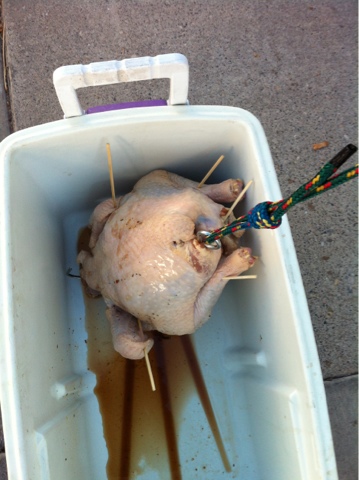
What time is it? TURKEY FRYING TIME!!!
The most juicy turkey I have ever ate is deep fried turkey. Frying the turkey really doesn't add much in the way of calories to the turkey either. Because it isn't breaded, when the turkey is lowered into the pot, the hot oil instantly sears the surface of the meat closed. All the moisture that was in the turkey before it went in, stays in.
They purpose of this blog post is to detail safety tips you will want to keep in mind if you decide to fry your own turkey. In subsequent posts, I will chronicle this Thanksgiving's turkey fry.
It is awesome.
I know they show scary videos of fryer fires every year.
Don't be afraid.
 |
| Buoyancy Test |
I don't want to minimize the danger, because what you are doing is using an open flame to heat up a flammable liquid (cooking oil) that you are going to use to cook the turkey in. The trick is to keep the flammable liquid away from the open flame. You accomplish this and there will be no fryer fire.
There are three main reasons turkey frys can turn into turkey fryer fires.
Fire Cause #1: Too Much Oil
How do you avoid putting too much oil in the turkey fryer? Its simple: do a buoyancy test. Days before the turkey fry, take the frozen turkey and put it in your fryer pot. Fill the pot with water until the level reaches the top of the turkey. The first thing this does is give you an idea how full your pot will be when you are frying your turkey. If you have very little freeboard on the sides of the pot above the water level, you will probably want to get a bigger pot or a smaller turkey.